Introduction
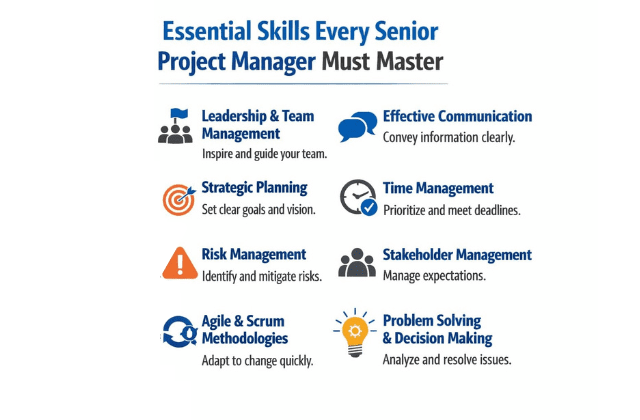
In project management the role of a senior project manager is pivotal to the success of any organization. As projects grow in complexity and scope, mastering a diverse range of essential skills becomes imperative. Senior project managers are not just overseers; they are strategic leaders who steer teams towards achieving organizational goals. This article delves into the essential skills every Senior Project Manager Must Master
Understanding the Role of a Senior Project Manager
Senior project managers play a crucial role in leading projects from inception to completion within large organizations. They serve as the bridge between stakeholders and the project team, ensuring that objectives are met on time and within budget. This multifaceted position requires a blend of technical knowledge, business acumen, and interpersonal skills. In essence, senior project managers are responsible for aligning project goals with the strategic vision of the organization, making their role integral to overall success.
Moreover, they navigate complex project landscapes that often involve multiple teams, stakeholders, and external partners. A senior project manager’s ability to manage these relationships is critical, as it directly impacts project outcomes. They must possess a clear understanding of the organizational structure, project goals, and the interdependencies among various teams to minimize risks and optimize resources effectively.
Lastly, senior project managers must be comfortable making high-stakes decisions and delivering difficult news. This requires a balance between assertiveness and empathy. They must cultivate a climate of trust and transparency, encouraging open communication among team members and stakeholders alike. Mastery of this role is not just about managing tasks but also about inspiring teams to reach their full potential while aligning with the organizational vision.
Communication: The Key to Successful Project Management
Effective communication is the cornerstone of successful project management. Senior project managers must excel in both verbal and written communication to relay complex information clearly and concisely. This skill enables them to articulate project goals, timelines, and expectations effectively to varied audiences, from executive leadership to team members. Regular updates and progress reports help maintain transparency, build trust, and foster collaboration.
Additionally, active listening is a critical component of communication that senior project managers must master. By engaging with team members and stakeholders, they can gather valuable feedback, address concerns, and adjust project plans accordingly. This two-way communication ensures that everyone is on the same page and that any potential issues are identified early on, allowing for timely interventions.
Furthermore, the ability to communicate effectively can significantly impact team morale and productivity. A senior project manager who can motivate and inspire their team through clear and open communication fosters a positive work environment. This leads to increased engagement, higher productivity, and ultimately, the successful delivery of projects.
Strategic Thinking: Planning for Long-Term Success
Strategic thinking is an essential skill for senior project managers, as it enables them to align project objectives with the broader goals of the organization. This involves analyzing market trends, understanding organizational priorities, and forecasting potential challenges. By adopting a strategic mindset, senior project managers can not only plan for immediate project needs but also position their projects for long-term success.
Creating a project roadmap is a practical application of strategic thinking. This roadmap outlines key milestones, resource allocation, and risk mitigation strategies. It serves as a guiding document that helps the project team remain focused and aligned throughout the project lifecycle. Additionally, a well-thought-out strategy allows for flexibility, enabling adjustments as circumstances evolve without losing sight of the end goals.
Moreover, senior project managers must engage in continuous learning and stay updated on industry best practices and emerging technologies. This ongoing education informs their strategic decision-making, ensuring that they can leverage new opportunities and address challenges proactively. By fostering a culture of innovation and adaptability within their teams, senior project managers can drive projects towards successful outcomes, even in an ever-changing landscape.
Risk Management: Anticipating and Mitigating Issues
Risk management is a fundamental aspect of project management that senior project managers must master. Identifying potential risks early in the project lifecycle allows for proactive mitigation strategies to be developed, reducing the likelihood of unexpected challenges arising later. This involves conducting thorough risk assessments, utilizing tools like SWOT analysis or risk matrices to evaluate potential threats to project success.
Implementing a robust risk management plan includes defining roles and responsibilities related to risk monitoring and mitigation. Senior project managers must ensure that their teams are aware of potential risks and empower them to report any issues promptly. This encourages a culture of accountability and vigilance that can significantly enhance project outcomes.
Additionally, senior project managers should regularly review and update their risk management strategies based on new information and changing project dynamics. This iterative process ensures that teams are always prepared for potential challenges. By fostering a proactive approach to risk management, senior project managers can maintain project momentum and safeguard against disruptions that could derail progress.
Leadership Skills: Inspiring Teams and Driving Results
The ability to lead effectively is vital for senior project managers, who are responsible for guiding teams towards successful project completion. Leadership in project management encompasses not only directing tasks but also inspiring team members to perform at their best. Strong leaders foster a collaborative environment where team members feel valued, empowered, and motivated to contribute to project goals.
A good leader also recognizes the strengths and weaknesses of their team members. By leveraging individual talents, senior project managers can create high-performing teams that work cohesively towards shared objectives. This involves providing constructive feedback, coaching, and facilitating professional development opportunities, contributing to both team morale and project success.
Moreover, effective leadership includes the ability to navigate conflicts and challenges gracefully. Senior project managers must be adept at resolving disputes, facilitating discussions, and promoting a positive team culture. By embodying strong leadership qualities, they not only drive project results but also contribute to the overall success and growth of the organization.
Negotiation Techniques: Achieving Win-Win Solutions
Negotiation is a crucial skill for senior project managers, especially when dealing with stakeholders, vendors, or team members. The ability to negotiate effectively can lead to win-win solutions that satisfy all parties involved. Senior project managers must approach negotiations with a clear understanding of both their objectives and those of the other party, fostering collaborative discussions rather than confrontational stances.
Preparation is key to successful negotiation. Senior project managers should gather data, understand the needs and constraints of all parties, and develop a range of potential solutions. This preparation allows for flexibility during negotiations, enabling them to pivot as discussions unfold while keeping the ultimate goals in mind.
Moreover, senior project managers should practice active listening during negotiations. By truly understanding the other party’s perspective, they can identify common ground and propose solutions that address everyone’s needs. This not only leads to more favorable outcomes but also builds stronger relationships with stakeholders, paving the way for future collaborations.
Time Management: Maximizing Efficiency and Productivity
Time management is a vital skill for senior project managers, who often juggle multiple projects and responsibilities simultaneously. The ability to prioritize tasks and allocate time effectively directly impacts project success. Senior project managers must utilize tools and techniques such as the Eisenhower Matrix or Gantt charts to visualize timelines and deliverables, ensuring that they meet deadlines while maintaining quality standards.
Effective delegation is also a key aspect of time management. Senior project managers should empower their teams by assigning tasks based on individual strengths and expertise. This not only maximizes team efficiency but also fosters a sense of ownership among team members, motivating them to deliver high-quality work.
Furthermore, regular time audits can help senior project managers identify areas where time is being wasted or where processes can be streamlined. By continuously evaluating efficiency and adjusting workflows, they can enhance productivity, ensuring that projects stay on track and within budget.
Adaptability: Navigating Change in Dynamic Environments
In today’s fast-paced corporate environment, adaptability is a critical skill for senior project managers. Change is inevitable, and the ability to pivot quickly in response to new challenges or opportunities can determine a project’s success. Senior project managers must cultivate a mindset of flexibility and resilience, encouraging their teams to embrace change rather than resist it.
One practical approach to fostering adaptability is to implement agile methodologies, which promote iterative development and allow for quick adjustments based on feedback. By adopting such frameworks, senior project managers can ensure that their teams remain responsive to evolving project requirements, stakeholder expectations, and market dynamics.
Moreover, senior project managers should actively seek out opportunities for innovation and improvement within their projects. Encouraging a culture of experimentation, where team members are empowered to propose new ideas and solutions, fosters an adaptable environment. This not only enhances project outcomes but also positions the organization to thrive in an ever-changing landscape.
Conclusion
Mastering the essential skills outlined in this article can significantly enhance the effectiveness of senior project managers in large organizations. By focusing on communication, strategic thinking, risk management, leadership, negotiation, time management, and adaptability, they can navigate the complexities of project management with confidence. These skills not only contribute to successful project outcomes but also foster a culture of collaboration and innovation, driving the organization towards long-term success.
Frequently Asked Questions About Senior Project Manager Skills
Senior Project Managers must develop a balanced combination of technical, strategic, and leadership capabilities. The most critical skills include communication, strategic thinking, risk management, leadership, negotiation, time management, and adaptability. These competencies enable professionals to manage complex projects while aligning delivery with organisational objectives.
In enterprise environments, these skills are not optional they are foundational. Without strong communication and leadership, for example, even technically sound projects can fail due to misalignment or poor stakeholder engagement. Mastery of these core areas ensures that Senior Project Managers can consistently deliver value at scale.
Communication underpins every aspect of project delivery. Senior Project Managers must translate complex project data into clear, actionable insights for different audiences, including executives, stakeholders, and delivery teams.
Beyond clarity, communication drives alignment and trust. Regular updates, transparent reporting, and active listening help prevent misunderstandings and ensure that issues are identified early. In large organisations, where multiple stakeholders are involved, strong communication is often the difference between project success and failure.
Strategic thinking enables Senior Project Managers to align individual projects with broader organisational goals. Rather than focusing solely on execution, they consider long-term business outcomes, market conditions, and organisational priorities.
This approach ensures that projects contribute to overall business value rather than operating in isolation. It also allows project managers to anticipate challenges, allocate resources more effectively, and adjust plans proactively. In enterprise settings, strategic alignment is essential for maintaining competitive advantage.
Risk management is essential for maintaining project stability and ensuring predictable outcomes. Senior Project Managers must identify, assess, and mitigate risks throughout the project lifecycle.
A proactive risk management approach reduces the likelihood of disruptions and enables faster recovery when issues arise. It also supports better decision-making by providing visibility into potential threats. In complex projects, effective risk management can significantly improve delivery timelines, cost control, and stakeholder confidence.
Leadership directly impacts team productivity, engagement, and overall project success. Senior Project Managers are responsible for creating an environment where team members feel motivated, supported, and aligned with project goals.
Strong leadership involves more than task management it includes coaching, conflict resolution, and performance development. By recognising individual strengths and fostering collaboration, leaders can build high-performing teams capable of delivering consistent results.
Negotiation is a critical capability when managing stakeholders, vendors, and internal teams. Senior Project Managers frequently need to balance competing priorities, budgets, and expectations.
Effective negotiation leads to mutually beneficial outcomes, ensuring that project objectives are met without damaging relationships. It also helps resolve conflicts and maintain alignment across stakeholders. In enterprise environments, where complexity is high, strong negotiation skills are essential for maintaining momentum and achieving successful outcomes.
Time management is crucial for handling multiple projects and competing priorities. Senior Project Managers must prioritise tasks, allocate resources efficiently, and ensure that deadlines are met without compromising quality.
Techniques such as structured planning, delegation, and workflow optimisation play a key role. Delegating tasks based on team strengths not only improves efficiency but also empowers team members. Regular performance reviews and time audits can further enhance productivity by identifying inefficiencies and opportunities for improvement.
Adaptability is increasingly important in today’s fast-changing business environment. Projects often face shifting requirements, evolving stakeholder expectations, and unexpected challenges.
Senior Project Managers must be able to respond quickly to change while maintaining focus on project objectives. This requires flexibility, resilience, and a willingness to embrace new approaches, such as agile methodologies. An adaptable mindset enables teams to remain competitive and deliver successful outcomes despite uncertainty.
Yes, these skills can be continuously developed through experience, training, and professional development. Senior Project Managers should actively seek feedback, invest in learning opportunities, and stay updated on industry best practices.
Ongoing development is essential in enterprise environments, where project complexity continues to evolve. By refining these skills over time, professionals can enhance their effectiveness, drive better project outcomes, and position themselves as strategic leaders within their organisations.
Author Bio:
Michelle McKee is the founder of Projectmanagertemplate.com, a central repository of technical assets designed for global PMOs. To bridge the gap between execution and innovation, she also curates Projectblogs.com, a pulse on modern project trends, and Pmresourcehub.com, a dedicated strategic hub for governance documentation and architectural blueprints.


This is a useful overview, and I particularly agree with the emphasis on communication, negotiation and leadership alongside traditional project management disciplines. The further someone progresses in project management, the clearer it becomes that technical competence alone rarely determines whether a difficult project succeeds.
I would, however, challenge slightly whether these are specifically senior project management skills. Communication, risk management, time management and adaptability are fundamental at every level. What changes at senior level is perhaps the context in which those skills have to be applied.
Senior PMs increasingly operate where there is no textbook answer: two influential stakeholders want incompatible outcomes; the technically preferable solution is unaffordable; a deadline is unrealistic but politically difficult to challenge; or changing circumstances have undermined the original business case.
This is why I think judgement deserves to be considered a senior project management skill in its own right. Strategic alignment, for instance, sounds relatively straightforward until an organisation has competing priorities or senior stakeholders interpret those priorities differently. The senior PM has to decide what really matters, what can be compromised and when established thinking needs to be challenged.
I’d make a similar distinction around risk management. Processes, assessments and risk registers are important, but mature risk management is also behavioural. A comprehensive risk register achieves little if people are reluctant to raise uncomfortable issues or risks are understated to reassure senior stakeholders. One of the most valuable things a senior PM can do is create an environment where someone feels able to say “I think we have a problem” early enough to do something about it.
I’d also question whether negotiation can always produce the “win-win” outcome described in the article. Sometimes projects involve genuine trade-offs. Effective senior project management can mean making the least damaging choice, explaining the consequences clearly and retaining the trust of stakeholders who didn’t get the outcome they wanted.
That also makes courageous communication particularly important. It’s relatively easy to communicate good news clearly. It takes considerably more skill to tell an executive sponsor that their deadline isn’t credible, challenge an assumption that has gained organisational momentum, or recommend stopping a project into which significant money and reputation have already been invested.
Perhaps, then, the evolution from project manager to senior project manager is less about acquiring a completely different set of skills and more about becoming comfortable operating where the tools, processes and methodologies stop providing an obvious answer. That’s where experience, judgement and an understanding of human behaviour really start to matter.
Thank you for taking the time to offer such a detailed response.
Your final point about becoming more comfortable in situations where tools and processes cannot provide the answer is really key to managing projects at a senior level. Typically, the complexity of projects (or programmes) managed by senior project professionals requires applying best practice under conditions of uncertainty, conflict and organisational pressure. And that is often far from easy.